Control product content from creation to market — across every distributor, region, and channel.
For industrial and OEM manufacturers, a single piece of off-brand or inaccurate content can create compliance exposure, damage dealer relationships, and delay product launches. Lytho is a content governance platform that gives manufacturing teams a single source of truth for digital asset management, approval workflows, and brand compliance — keeping content accurate, approved, and on-brand from product documentation to distributor enablement.


From disconnected content to governed content operations
In industrial and OEM manufacturing, content complexity is compounded at every level. Product documentation, technical data sheets, dealer network materials, safety and regulatory assets, and regional campaign content are frequently produced across disconnected systems, agencies, and internal teams.
Without structured approval workflows or centralized digital asset management, version control breaks down — outdated spec sheets reach distributors, regulatory language gets missed, and product launches stall waiting on review cycles. The result is increased compliance risk, inconsistent brand governance, and slower speed to market.
Lytho embeds brand governance, marketing compliance, and approval workflows directly into the content creation process. Marketing, product, legal, and channel teams work from a governed library of approved digital assets — including technical documentation, product imagery, and partner-ready sales materials.
AI-assisted reviews flag regulatory and brand issues before content enters formal review cycles, and standardized workflows ensure every asset is traceable, audit-ready, and consistent — whether it’s destined for a global distributor, an OEM partner, or a regional dealer network.
One platform. Complete visibility.
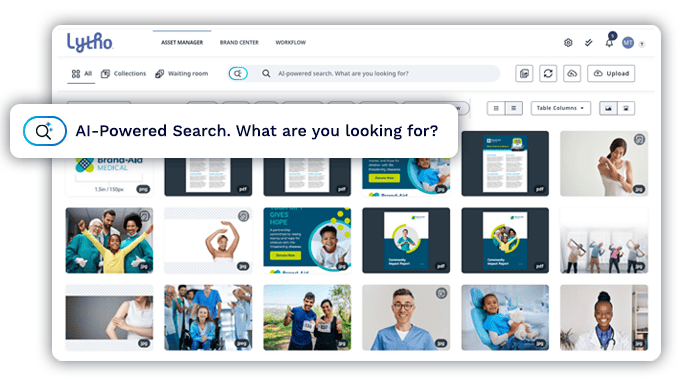
Find and distribute compliant assets instantly with version control.
 Click to enlarge
 Fewer delays with clear deadlines and audit-ready trails.
 Click to enlarge
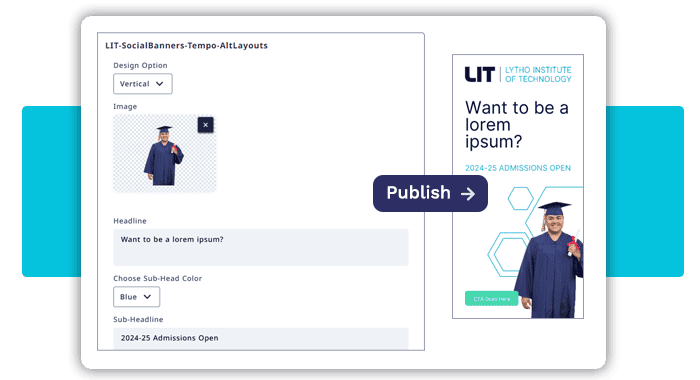
 Locked-down templates with variable options mean other teams can serve themselves while staying on brand.
 Click to enlarge
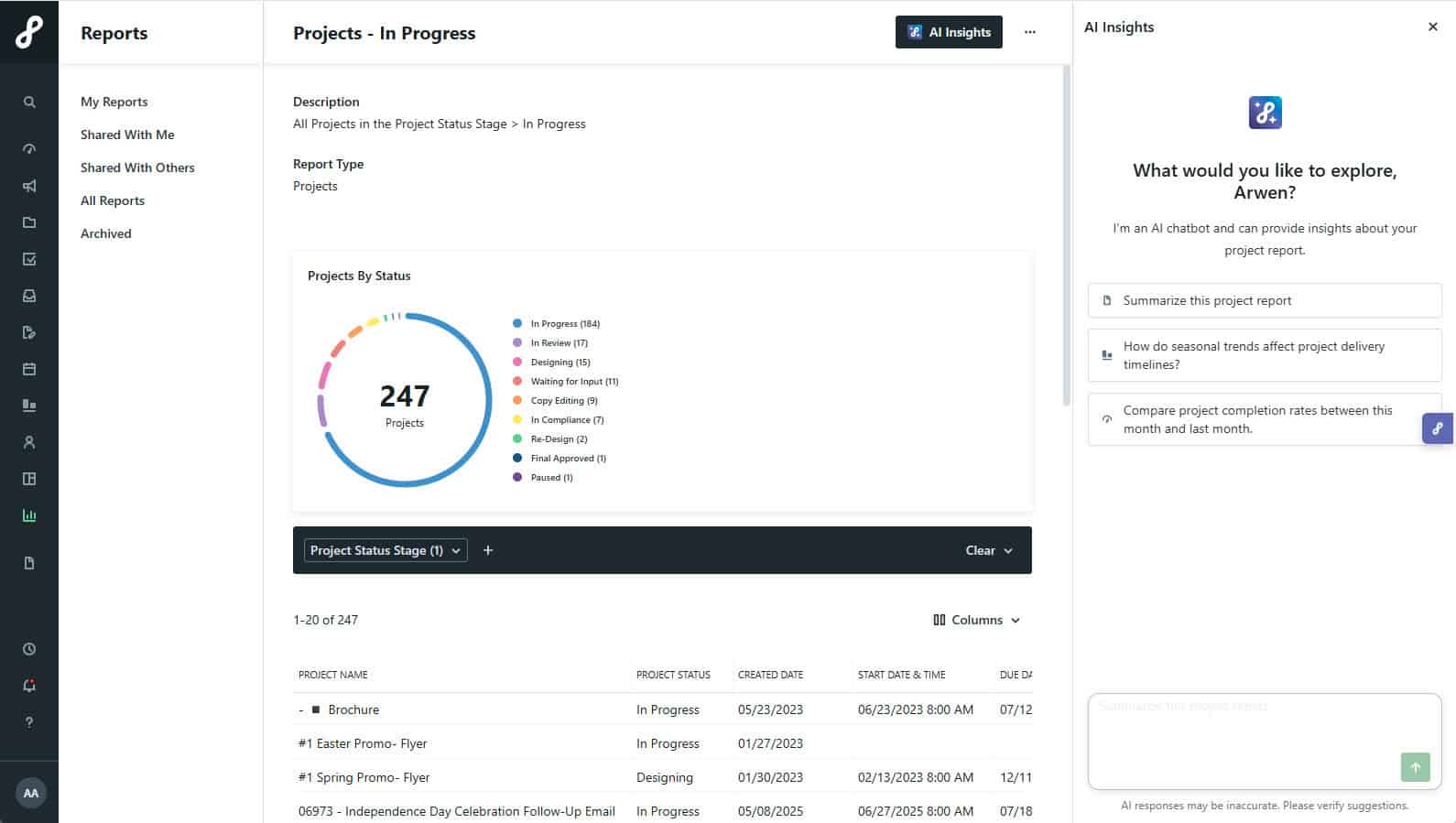
 Track timelines and team capacity in real time.
 Click to enlarge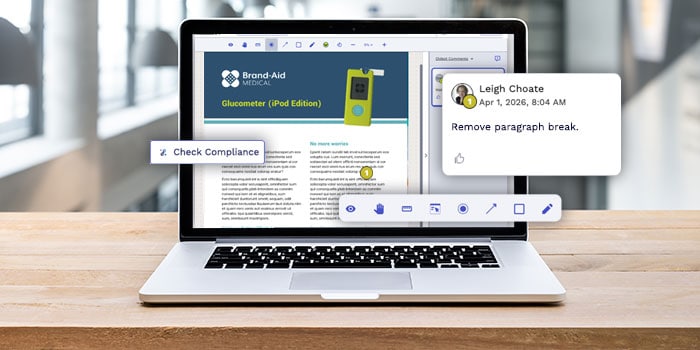
How teams reduce risk and move faster with Lytho

“With our previous DAM, we needed an outside developer just to get PIM working. With Lytho, our team figured it out themselves. It was already done before we even called it Phase 2. Our stakeholders love how easy it is to upload assets, share files, and stay organized. We’re really pleased.”

Trusted by enterprise marketing teams
Trusted by manufacturers and enterprise organizations that need consistent content, governed workflows, and visibility across distributed teams.





Frequently Asked Questions: Manufacturing Content Governance
Manufacturing content governance is the practice of managing how product and marketing content is created, reviewed, approved, stored, and distributed across an organization and its partner networks. For industrial and OEM manufacturers, effective content governance means ensuring that technical documentation, regulatory assets, product imagery, and marketing materials are accurate, compliant, consistently on-brand, and accessible to the right teams and distributors at the right time. A content governance platform enforces these standards through approval workflows, role-based permissions, centralized digital asset management, and audit trails — replacing informal, manual processes that create compliance risk and slow product launches.
Digital asset management (DAM) for manufacturers provides a centralized, searchable repository for all product and marketing content — including technical data sheets, product photography, CAD renderings, compliance documentation, sales enablement materials, and dealer network assets. A manufacturing DAM system enables teams to find current, approved files instantly using AI-powered search and metadata tagging, eliminating the version control problems that arise when content is distributed across email, shared drives, or disconnected portals. For industrial and OEM manufacturers, DAM also supports regulated industries by maintaining audit trails, managing rights and permissions, and ensuring only approved assets reach distributors, partners, and customers.
Maintaining brand consistency across a large distributor or dealer network requires more than a PDF brand guide. Manufacturers need a brand governance system that gives external partners self-serve access to approved digital assets and locked-down templates — materials they can customize within defined parameters without going off-brand. Lytho’s brand compliance tools allow manufacturers to define exactly what partners can and cannot change, ensuring that every piece of channel content meets brand standards and contains accurate product information, regardless of where or by whom it was produced.
Approval workflows formalize and automate the review and sign-off process for content, replacing ad hoc email chains and informal approvals with structured, trackable, and time-bound review cycles. For manufacturers, this is particularly important for content that carries regulatory, legal, or technical accuracy requirements — such as product documentation, safety labeling, and compliance certifications. Standardized approval workflows reduce review cycle times, ensure the right stakeholders (marketing, legal, product, compliance) are involved at the right stages, and generate documented audit trails that support both internal governance and external regulatory requirements.
Marketing compliance software ensures that all outward-facing content — from product documentation and distributor materials to digital advertising and packaging — meets internal brand standards, regulatory requirements, and legal review obligations before it goes to market. For industrial and OEM manufacturers, the stakes of non-compliant content are high: incorrect safety labeling can create product liability exposure, outdated technical specifications can damage distributor relationships, and off-brand partner materials can erode years of brand equity. Marketing compliance software builds these checks into the content creation process itself, catching issues earlier — and far more cheaply — than post-publication corrections.
These three categories of software address related but distinct content management needs. Digital asset management (DAM) focuses on storing, organizing, finding, and distributing rich media files — images, video, documents, and technical assets. Product information management (PIM) manages structured product data — specifications, SKUs, pricing, and attributes — typically for use in e-commerce and distributor catalogs. Marketing resource management (MRM) governs the planning, budgeting, and execution of marketing activities and campaigns. For industrial and OEM manufacturers, a content governance platform like Lytho bridges DAM and MRM capabilities — combining centralized asset management with structured approval workflows, brand governance controls, and distributor enablement tools.
Launch products faster with less risk
Create a single source of truth for content, streamline collaboration, and build governance into content creation from the start.